
There are places, often on the border, where history has left precious traces but which, to use Guccini’s words, “suffer the ravages of time.” The need to move closer to more populous, lively urban centers, and above all, with greater employment opportunities, leads to a progressive loss of residents and, consequently, services. This is until a small handful of resilient, stubborn people, in love with their territory, decide that it’s time to reverse course in these very places.
This is what is happening in Sambuca Pistoiese, a land between Tuscany and Emilia, where the administration and associations have teamed up to enhance the area’s potential and attract new residents and visitors. One of the strategies implemented involves the creation and development of several trekking trails of varying difficulty. The natural environment, rich in woods and forests that extend across panoramic mountains, and the villages scattered throughout the area, lend themselves to visitors who enjoy slow tourism. The most significant route is a approximately 52-kilometer loop between Taviano, the Passo della Collina ridge, and the Limentre Valleys. The route, a deep immersion in an extraordinarily coherent historical and natural setting, can be explored on foot, by mountain bike, or on horseback.
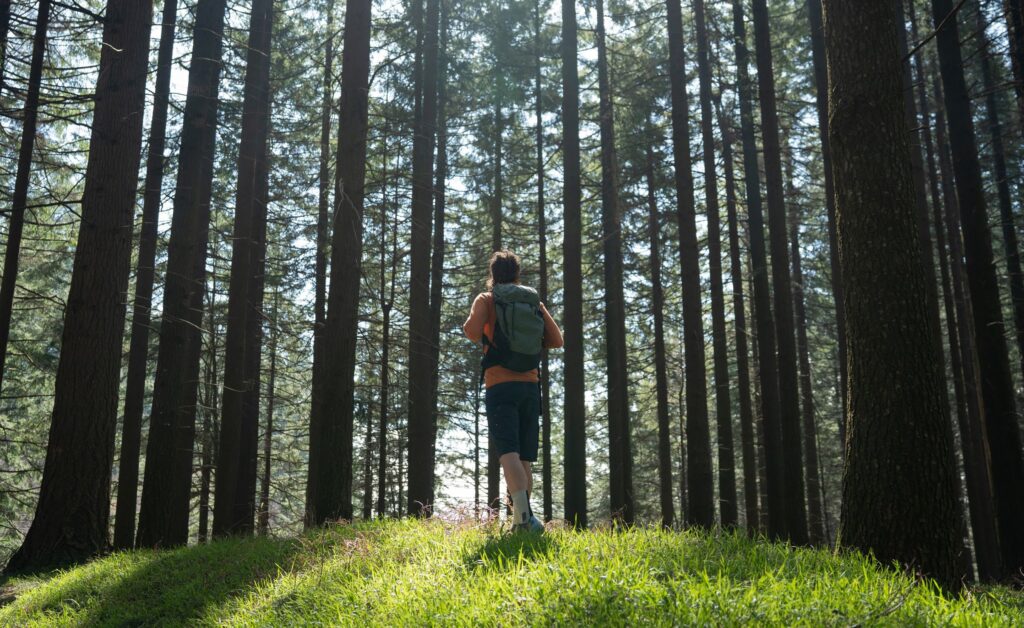
The Gateway to the Apennines: Departure from Taviano
The route begins in Taviano, a hamlet of Sambuca Pistoiese, where the Limentra Valley opens up. The choice to arrive by train, taking the historic Porrettana line and alighting at the Ponte della Venturina or Pracchia stations, is not only a logistical convenience but also a gesture of respect for this evocative yet fragile territory. Disembarking from the train is the ideal prologue to a journey that unfolds between past and present.
From the main square in Taviano, you join the road that climbs toward Posola.
The climb requires good lungs, but the effort is quickly rewarded by the view. Shortly after starting, turning right, you can leave the main route and climb toward Sambuca Castello.
Perched like an eagle’s nest, the castle stands sentinel over the valley.
The stone walls, which have survived centuries of conflict between Pistoia and Bologna, convey a sense of austere solidity. Here, the silence is broken only by the whisper of the wind. Visiting this village means understanding what “border” meant in medieval times: a line drawn on the rock where the fate of entire communities was decided.
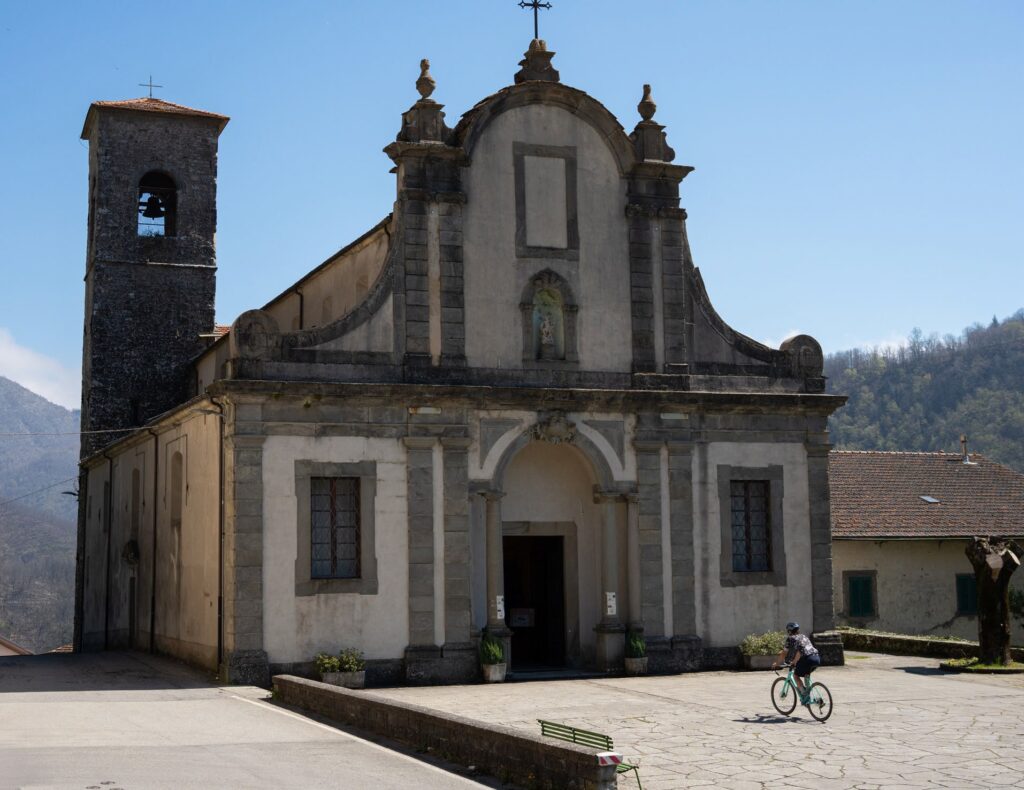
The Mystical Heart: From Posola to Badia a Taona and the Sassi di Pasqua Before reaching Posola, animated in the summer by the local Proloco (tourist association), we head towards Pidocchina and Passo della Collina.
After crossing the pass, the vegetation changes and the chestnut trees give way to beech forests, offering dense and rejuvenating shade. Here, Badia a Taona awaits us. Founded in 1010, this Benedictine abbey was a hub of culture and charity. Today, its ruins blend with the forest, creating an atmosphere of secular spirituality that envelops anyone who pauses among its ancient stones.
Continuing into the thick of the forest, we come across one of the most fascinating mysteries of the Apennines, the Sassi di Pasqua (Easter Rocks). These imposing sandstone formations, shaped by erosion and time, bear engraved carvings of uncertain date. The legend, passed down orally by the inhabitants of Sambuca, tells of a traveler saved from a storm on Easter morning who, as a sign of gratitude, carved the sign of the cross into the rock.
Recent studies suggest that the Sassi were, for millennia, a pre-Christian place of worship linked to the fertility of the land, later reinterpreted in a Christian key by monks. Observing these “stone libraries” is like experiencing firsthand an ancestral dialogue between man and the mountain.
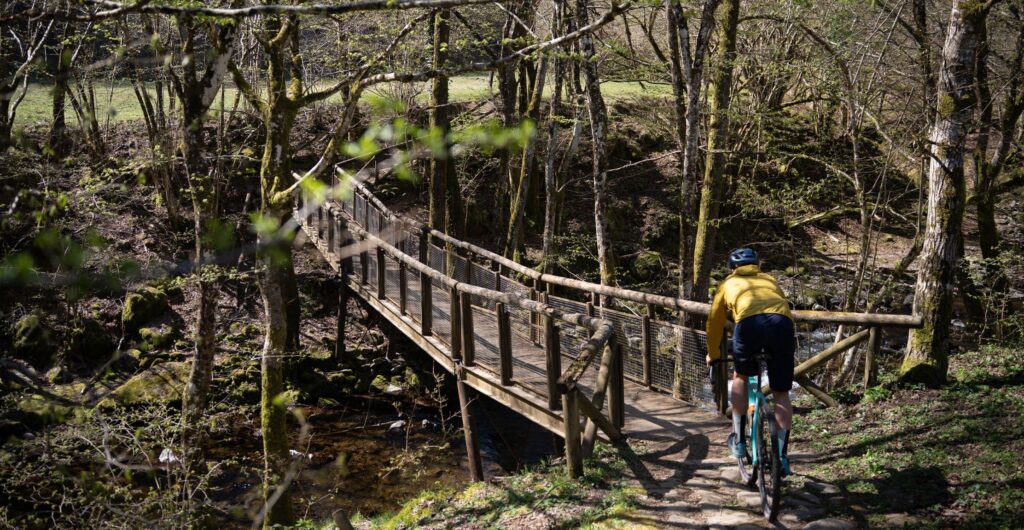
Torri and Treppio: The Art of Living in the Mountains
Leaving the Sassi behind, the descent takes us to Torri, an emblematic example of well-preserved rural landscape. The stone houses, carved portals, and clean alleys testify to a community that has never stopped caring for its land.
From Torri, cycling tourism takes a quantum leap: here, the loop ideally rejoins the Ciclovia del Sole, like a gateway to Europe for those who, from North Cape to Sicily, choose to explore the world by bike.
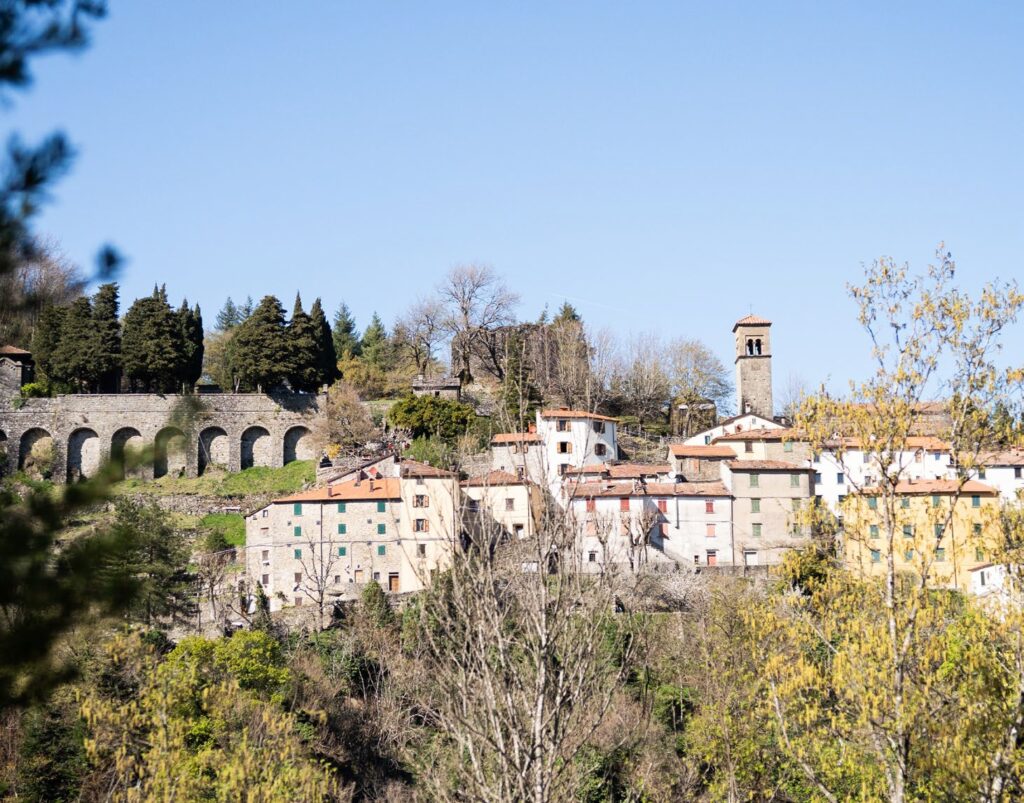
A little further on, we come to Treppio. It is the valley’s aristocratic village, characterized by a sober elegance.
Its stately homes are a reminder that in the past, the forest and stone economy generated wealth and beauty. Its secluded location makes Treppio the perfect place for a gastronomic stop: forest produce, from mushrooms to chestnuts, reaches peaks of excellence here.
For hikers, from Treppio, following path 165, you can return directly to Taviano in about two hours, along a highly evocative path.
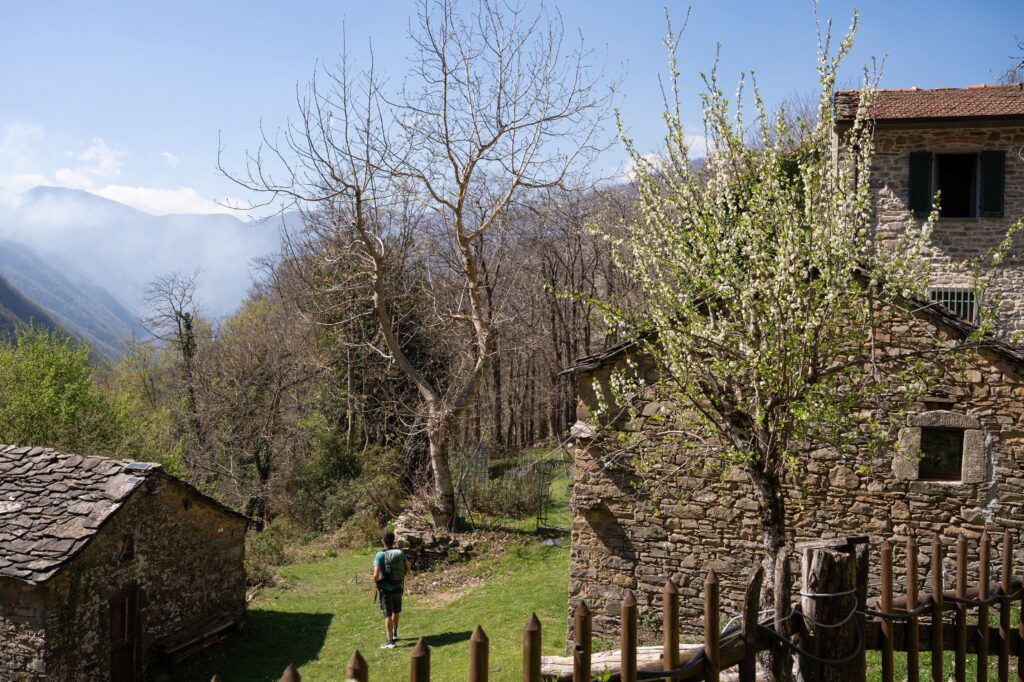
The Return: The River as a Guide The final section of the route, passing Badi and descending toward Ponte della Venturina, is a natural relaxation. Following the course of the Limentra River means being guided by the force of the water, which has shaped the rock and the history of this valley. At this point, if you came by train, the journey has come to an end. Alternatively, the return to Taviano completes the loop and leaves the traveler with the knowledge of having traversed not only 52 kilometers of road, but a living book of geology, art, and legends.
Travel Tips: Choosing the right bike for cyclists is crucial to enjoying this route. A gravel bike or mountain bike are ideal for managing the varied terrain.
The 1,300-meter elevation gain requires good physical fitness, but the option of using an e-bike makes this route accessible to a wide range of riders, provided they are aware of battery management. Finally, remember to book in advance in small villages: accommodation is good but limited, which is a plus for those seeking authenticity.
The Apennines are not a destination of passage. They are a destination where, if you stop to look, you can still hear a plurality of voices: the voice of the stone and the forest.
Text by Cristiana Petrucci and Alessandro Maci
Photo by Lorenzo Marianeschi