
With approximately 30,000 described species – a number constantly increasing thanks to the continuous discovery of new taxa – orchids constitute the largest family of flowering plants on the planet. A numerical quantity that does not at all coincide with abundance: many species are rare, sometimes endemic, and the entire family is included in Appendix II of the CITES Convention. Numerous entities also appear on national and international red lists, confirming their vulnerability.
The family name, formalized in 1789 by the French botanist Antoine-Laurent de Jussieu, derives from the genus Orchis, a Greek term meaning “testicle,” referring to the shape of the underground tubers. A morphological detail that is intertwined with the myth of Orchis from Hellenic tradition, contributing to the aura of mystery that has always surrounded these plants.
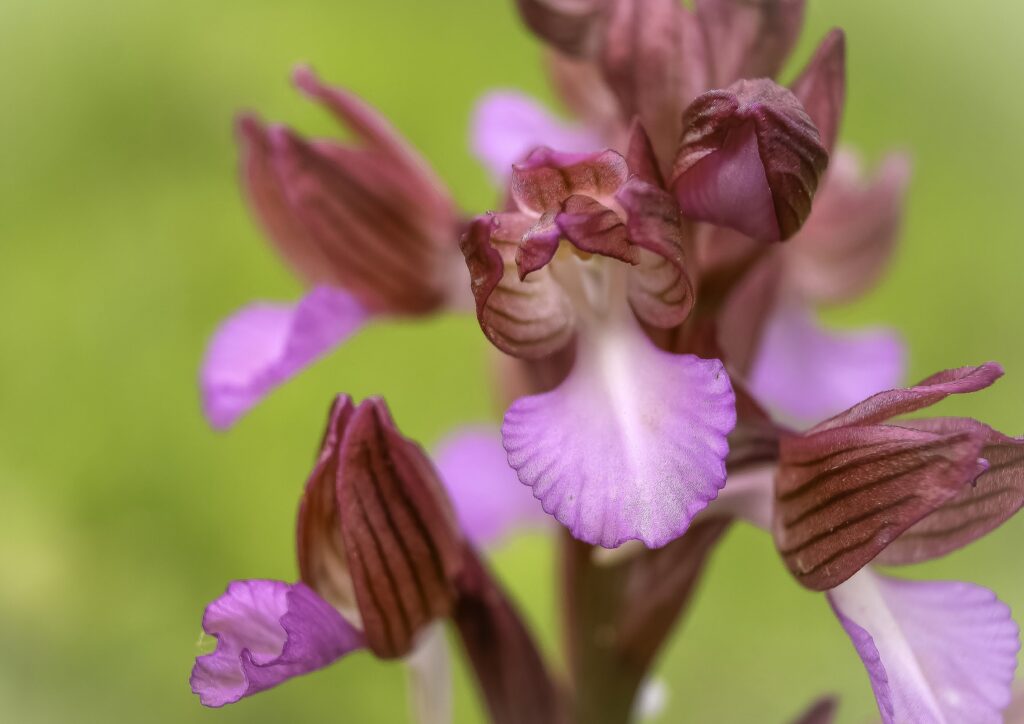
But what makes orchids so special? First of all, the appearance. Their flowers, often complex and theatrical, can evoke insects, birds, or tiny animals; sometimes they recall anatomical forms related to the sexual sphere. It’s not just a matter of aesthetic appeal: in many cases, these similarities are highly sophisticated evolutionary strategies to attract specific pollinators. This is also why orchids dominate the global ornamental market. The most common in garden centers and large retailers are cultivars derived from hybrids of tropical epiphytic species, which represent approximately 75% of existing orchids and live anchored to tree trunks in humid forests.
The situation in Europe, and therefore in Pistoia, is quite different. The wild orchids in our area are all terrestrial: they grow in the soil as geophytes, with buds protected in underground organs – mostly rhizotubers – that allow them to survive adverse seasons. The flowers, generally smaller than their tropical cousins, often go unnoticed by the casual eye, but reveal a surprising beauty to those who stop to observe.
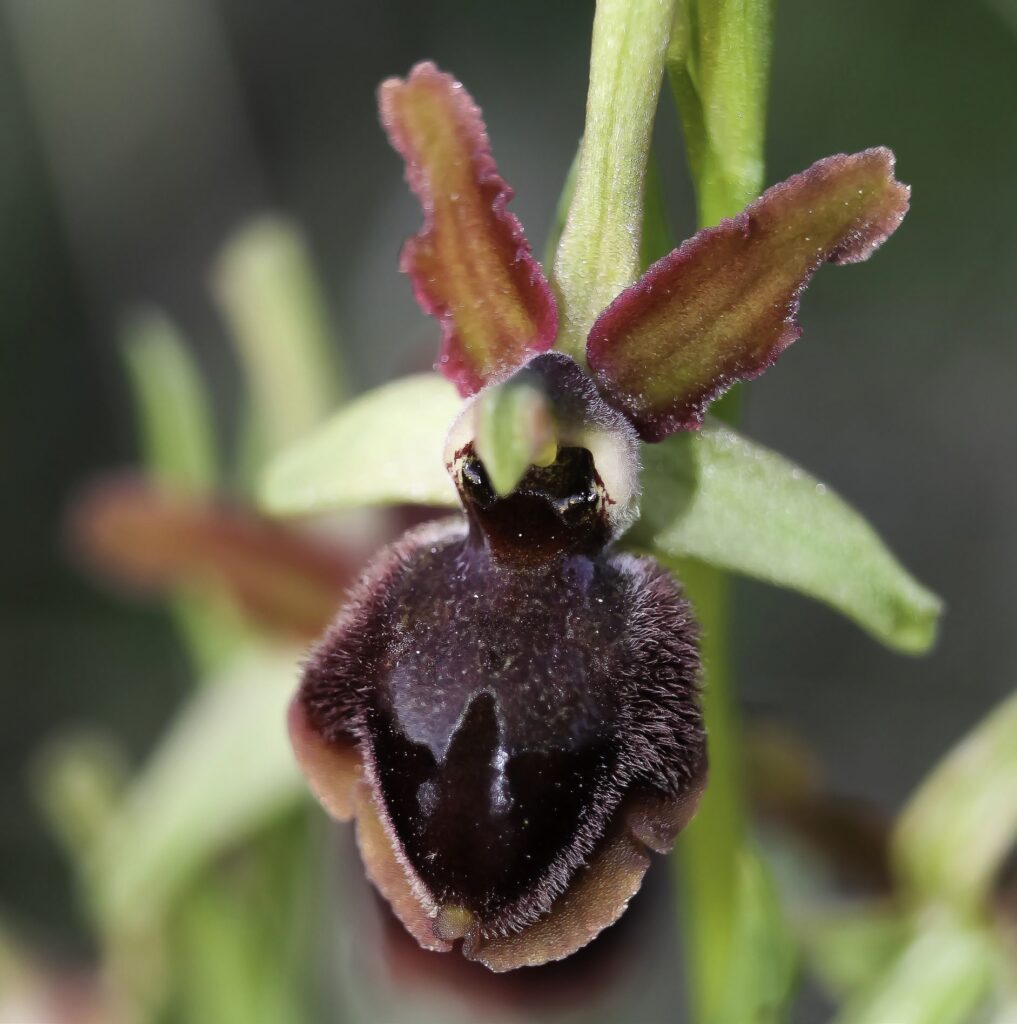
Their absence from the ornamental market is not due to a lesser attractiveness, but rather to the difficulty of propagation. Orchid seeds are tiny and lack an endosperm, or nutrient reserves: to germinate, they must establish a delicate symbiosis with specific soil fungi. Without this invisible alliance, the seedling cannot develop. It is one of the most fascinating examples of cooperation between different kingdoms of nature.
Precisely because of their complex ecology, orchids are considered indicators of environmental quality according to the Habitats Directive 92/43/EEC (Bianco, 2012). Their life cycle requires intact soils, active mycorrhizal fungi, and efficient pollinating insects, such as many wild bees. Where orchids thrive, a balanced ecosystem usually also thrives.
The urban and peri-urban area of Pistoia offers encouraging signs in this regard. The high number of recorded species testifies to the presence of environments still rich in biodiversity, capable of coexisting with human activities, including the floriculture that characterizes the local economy.
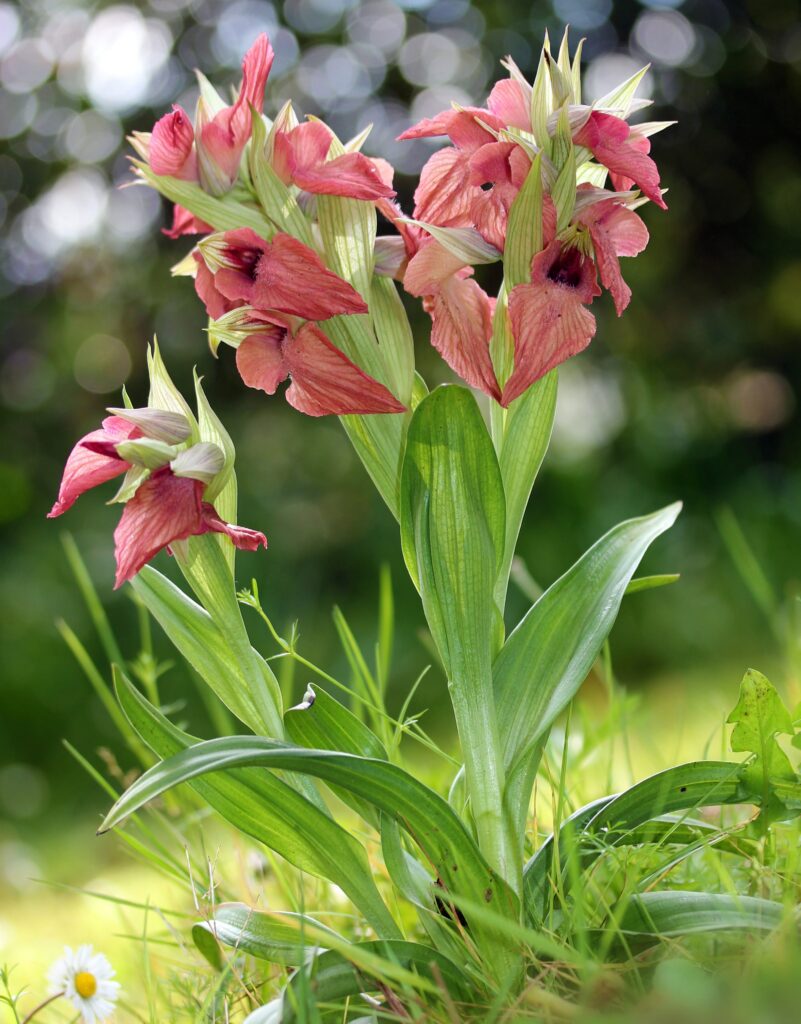
Between 2024 and 2025, the “Census of Wild Orchids” project in the Pistoia hills, funded by Uniser and led by naturalist Lara Uccini, documented several thousand specimens distributed across 32 locations, including urban, peri-urban, and rural areas: uncultivated lands, olive groves, public parks, gardens, and woods. A total of 26 taxa (species and subspecies) belonging to 7 botanical genera have been recognized. In the second year, the survey area was significantly expanded compared to 2024, more than doubling the number of monitored sites and identifying new species, even in previously studied areas.
These results, while representative, are not exhaustive. Orchid populations can vary significantly over time due to natural and anthropogenic factors: climate change, urbanization, intensive agricultural practices, grazing, indiscriminate flower picking, and, last but not least, tuber digging by wild boars. Continuous monitoring is therefore essential both to update the list of present species and to evaluate population trends.
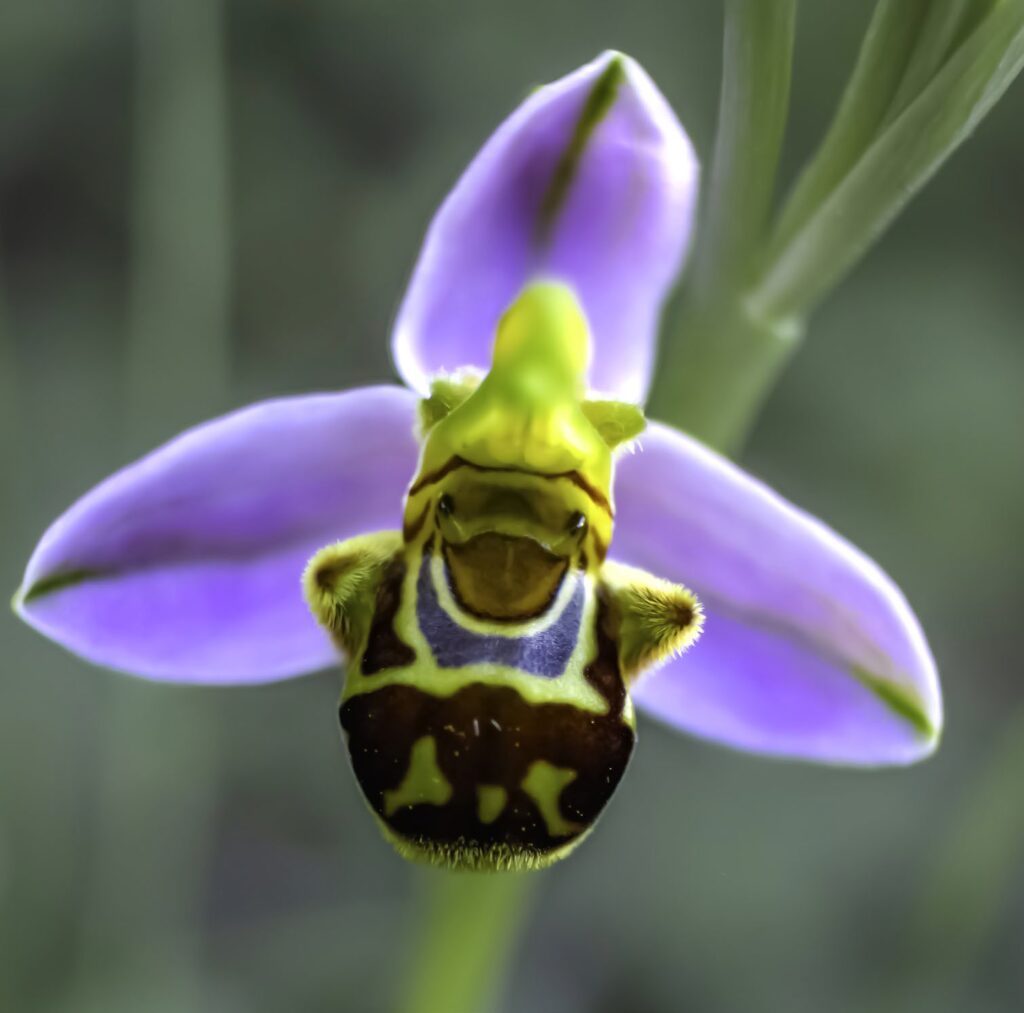
Furthermore, potentially suitable areas remain to be explored, especially at higher altitudes. The Pistoia Mountains are known to host orchids of considerable botanical interest: a systematic census would complete the knowledge base and offer, for the first time, a comprehensive overview of the entire provincial orchid flora.
The taxonomic determinations of the surveyed taxa were conducted following the most recent national floristic references (Bartolucci et al., 2024). But beyond the lists and numbers, the message is clear: wild orchids are not just fascinating flowers.Ma al di là degli elenchi e dei numeri, il messaggio è chiaro: le orchidee spontanee non sono soltanto fiori affascinanti. They are a tangible sign of a complex, fragile, and precious ecological balance.
Protecting them means protecting a natural heritage that silently speaks to the quality of our land.
Text by Maurizio Antonetti Researcher at CREA – Horticulture and Floriculture Research Centre Lara Uccini President of the WildType naturalistic association.