
Many years ago, between the late 19th and early 20th centuries, in the areas then known as “Boscolungo” and “Serrabassa,” new houses were built on both sides of the main road. Other pre-existing buildings, however, humble and modest, were renovated and made habitable: rustic yet beautiful, built with stone and much labor, they became “noble villas” or, more simply, “holiday homes.” It was undoubtedly the beauty of the mountains, the centuries-old beech and fir forests, and the clear, crystal-clear air that enticed the “gentlemen” of the time—illustrious writers and renowned scholars—to build their own homes there, to enjoy during the warmer months. The presence of this new seasonal population, refined and wealthy, allowed Abetone to make its first economic leap, making it a highly sought-after summer resort.
On the Tuscan side, just before the village called “Cecchetto” we find the first villas, now uninhabited or transformed into hotels or private homes: Villa De Viti, Villa La Roccia, followed by Villa Zaubow and Villa Salviati.
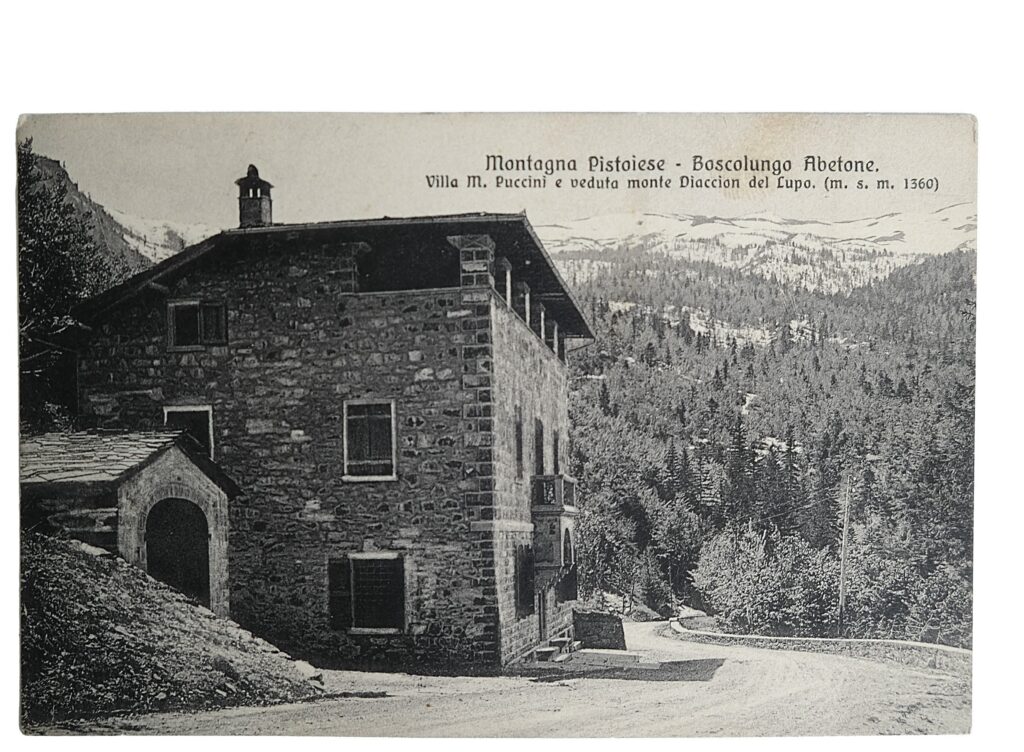
VILLA LA ROCCIA – Cecchetto
In the “La Bocca” area, we are at the entrance to the Boscolungo forest. This villa, built by Baroness Elizabeth von Marenholtz of Hanover in 1900, takes its name from the fact that a huge rock outcrop was demolished to make way for it. It was purchased for 18,000 lire in 1909 by Sir William Matthews; during the Second World War, being located along the Gothic Line, this villa was the headquarters of the German High Command. It was looted and suffered severe damage, and Matthews’ son, Arthur, restored the building, living there until the early 1960s.
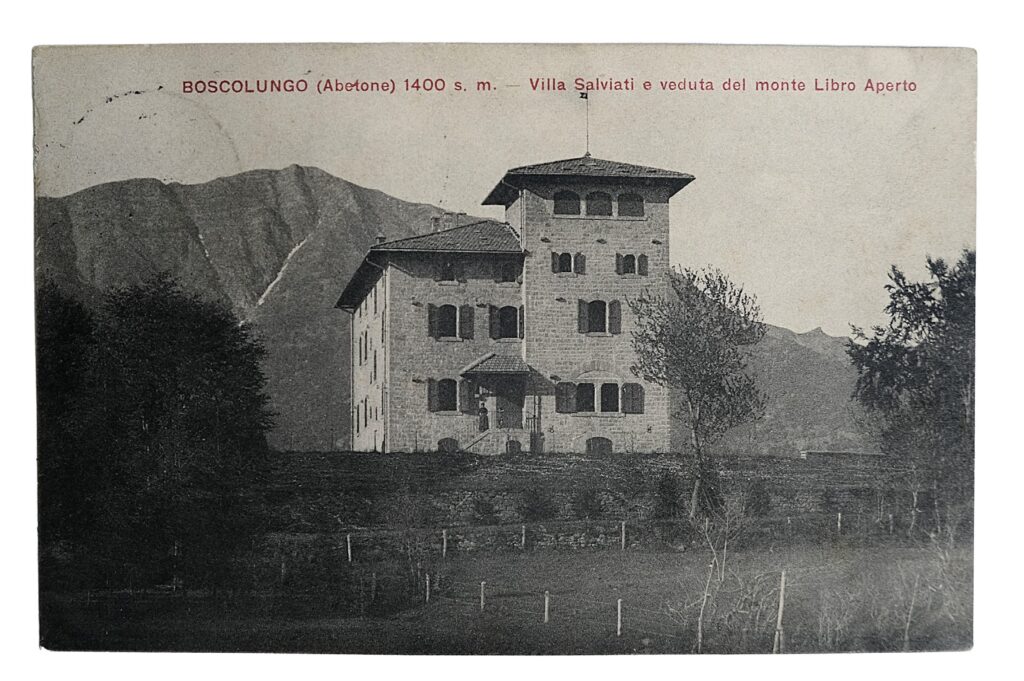
VILLA DE VITI – Cecchetto
Villa De Viti was built among the trees above the hamlet of Cecchetto in the first decade of the 20th century by the Marquises De Viti, who resided in Rome during the winter.
The Lecce nobleman stayed there from June to October with his entire family, his New York-born wife, and their three children, James, Giulia (Etta), and Lucia.
Their mountain residence, now completely abandoned, was constantly frequented by Italian and foreign nobles; the Marquis himself, a member of parliament for the Radical Party, met many colleagues and party comrades at his villa.
During the Second World War, it was the headquarters of the German Command.
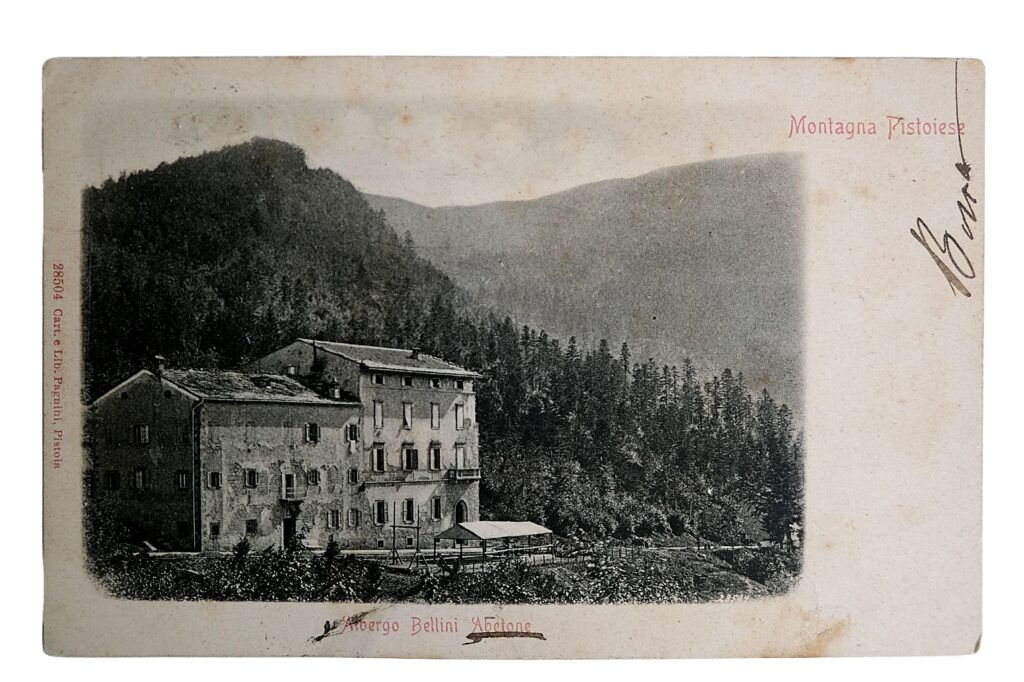
VILLA ZAUBOW – Fontana Vaccaia
During the early 1900s, Villa Zaubow was built in the “Fontana Vaccaia” area. This building, parts of which can still be admired today, takes its name from a Russian princess, wife of a Tsarist general. Some elderly residents of Abetone remembered her as a woman of modest appearance but a generous nature; in fact, she left her employees a sort of monthly annuity. During the winter, the noblewoman lived in the Villa dell’Ombrellino, in Bellosguardo (Florence).
VILLA SALVIATI – Le Regine
A little off the main road, we find the historic building that has certainly lost the least of its original charm: Villa Salviati. It was in 1903 that Francesca De La Rochefoucauld gifted her daughter Maria Aldobrandini Salviati the splendid building that can still be admired today. It was built entirely of local pietra serena stone, surrounded by a garden complete with a gazebo, a meeting place for all the nobility and prominent figures from the political, economic, and cultural worlds of the time who stayed in Abetone. One of the first tennis courts was also built a few meters away.
A few kilometers further on, right near the Abetone Pass, are the other villas: Villa Major, Villa Gardini Brugnoli, and then, along the main road, on the “Serrabassa” side, Villa Bondi on the right, Villa Mantegazza on the left, Villa Strozzi before the bend, and a few meters below, Villa Imperatori.
VILLA MAJOR – Abetone
In the late 19th century, among the foreign tourists who began to come to Abetone for vacation, some established themselves with their own businesses.
The Scotsman Forsith Major transformed part of the old Modena customs house into a small but charming hotel. “…renovated in 1881, in the midst of a beautiful fir forest…it is kept in Swiss style, open from May 20th to October 15th…” It was later purchased by the Samarughi family who converted it into a private residence.
VILLA GARDINI BRUGNOLI – Abetone
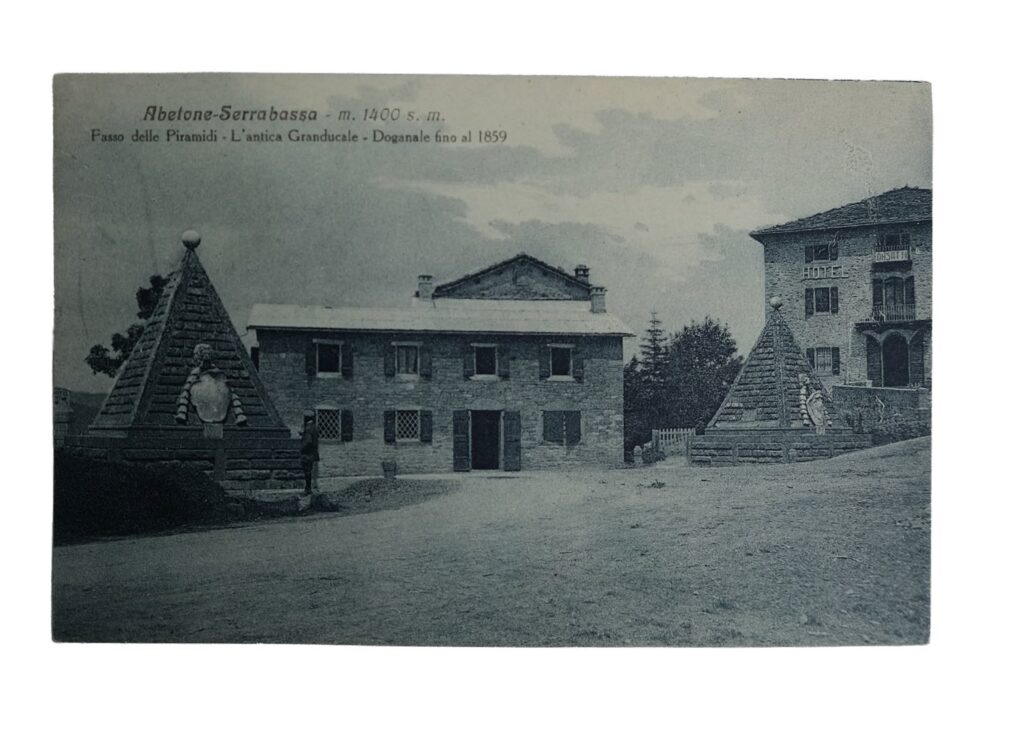
When the Grand Ducal Road opened in 1776, it was essential to build a customs house, post office, stables, and a shelter. Villa Giardini Brugnoli dates back to that period, serving as a shelter for the soldiers stationed on the border between the Duchies of Modena and the Grand Duchy of Tuscany.
With the unification of Italy, the customs house, post office, and the building that had housed soldiers and gendarmes were no longer needed, and so the entire building was purchased by Professor Gardini Brugnoli of Ferrara, who then bequeathed it to the Ospedali Riuniti of Bologna. It became a hotel thanks to Gaetano Orsatti, a native of San Marcellino, and was later expanded by the Petrucci family of Abetone.
VILLA BONDI – Abetone
Very little is known about this villa, which was inhabited by the Florentine nobleman Camillo Bondi, a friend and confidant of Maestro Giacomo Puccini, who also owned a villa not far from this one.
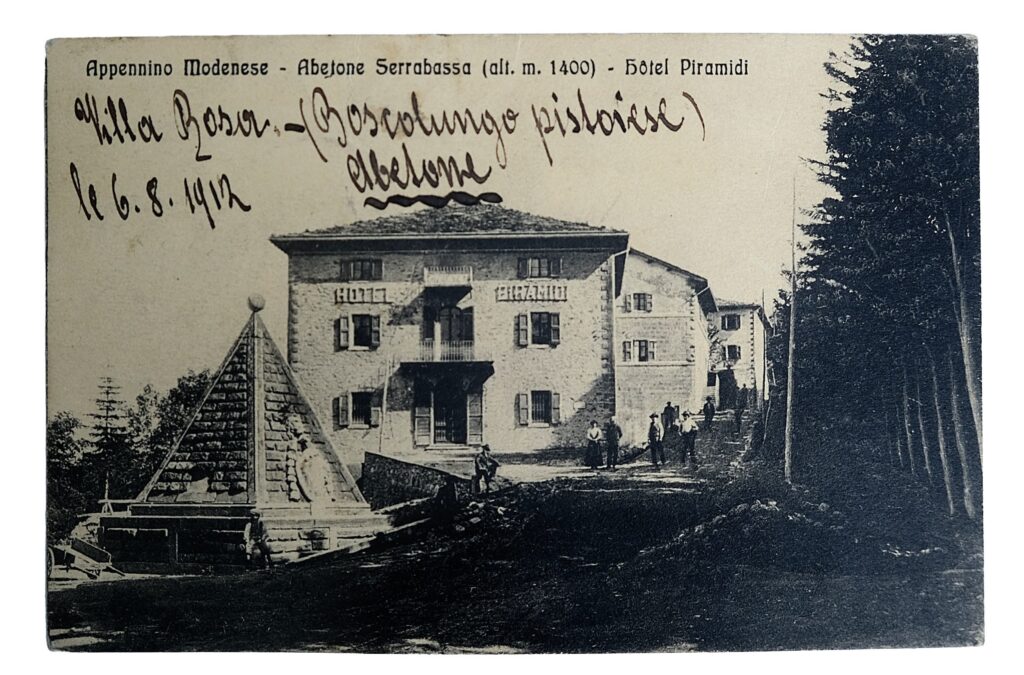
VILLA MANTEGAZZA – Abetone
This villa is named after its owner, Paolo Mantegazza.
An eccentric, medical physiologist, hygienist, and pathologist, he was a tireless organizer and promoter of culture between the 19th and 20th centuries. Among his numerous publications is “Hygiene of Climates” (1879), which extolled the healthiness of mountain air as a cure for certain ailments. “The climate of Abetone is delightful and mild, excellent… my house is twenty steps from an immense, shady, aromatic, enchanting forest…”
VILLA STROZZI – Abetone
This villa was specially built and donated in 1903 as a wedding gift by Marquis Massimiliano Strozzi to his future wife, Mrs. Guendalina Steward, of English origins. Widowed in 1915, she lived there during the summer season until the late 1950s.
VILLA IMPERATORI – Abetone
The composer Giacomo Puccini loved the Pistoia mountains, where he would come to cool off during the hot summers between the late 19th and early 20th centuries. This love led him to purchase a small villa in Abetone in 1903, where he wrote some pages of “La Fanciulla del West.” In the thousands of letters the composer sent to his friends, this is how he described the high mountains of Pistoia: “…deliciously cool here, never rain, only one attempt one day… I was satisfied with Abetone and am very happy…”
Text by Clara Tonarelli
Archive photo by Clarissa Tonarelli