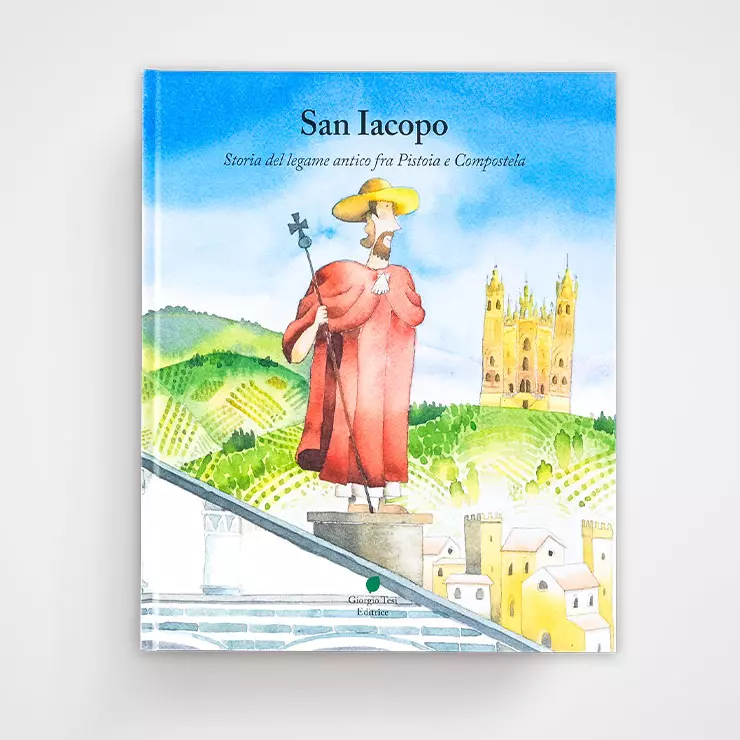

Every July 25th, Pistoia’s Cathedral Square is transformed into a large arena where the knights of the city’s four districts, Drago, Cervo Bianco, Leon d’Oro, and Grifone, compete in the Giostra dell’Orso (Bear Joust), the culminating moment of the celebrations dedicated to the patron saint, San Jacopo.
An event that every year draws residents and visitors, united in a sort of collective ritual.
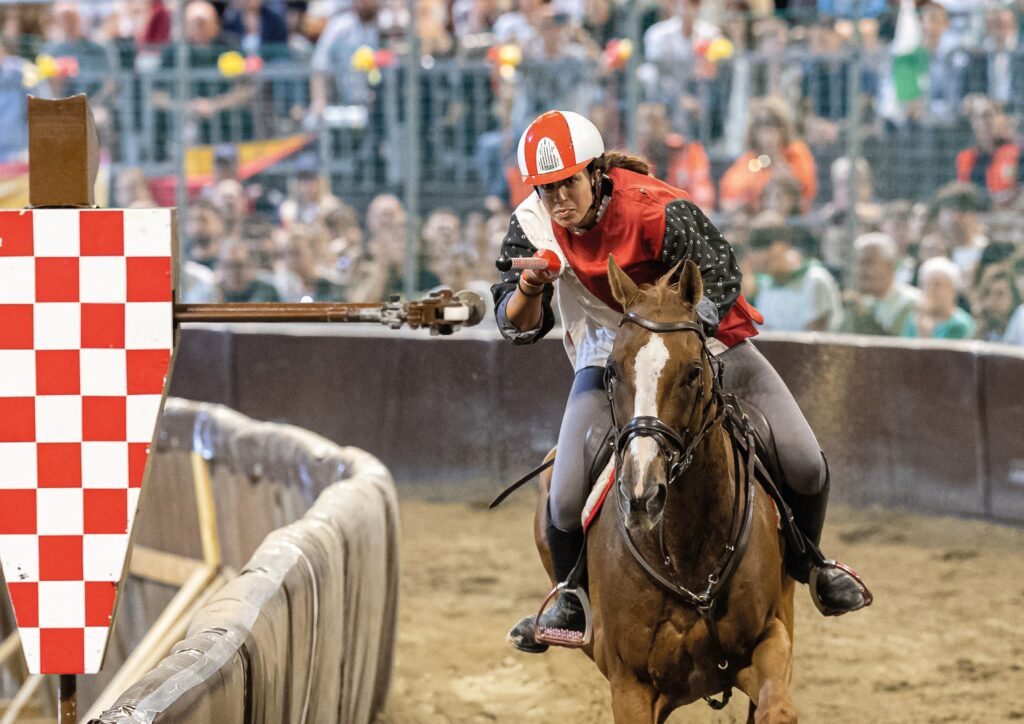
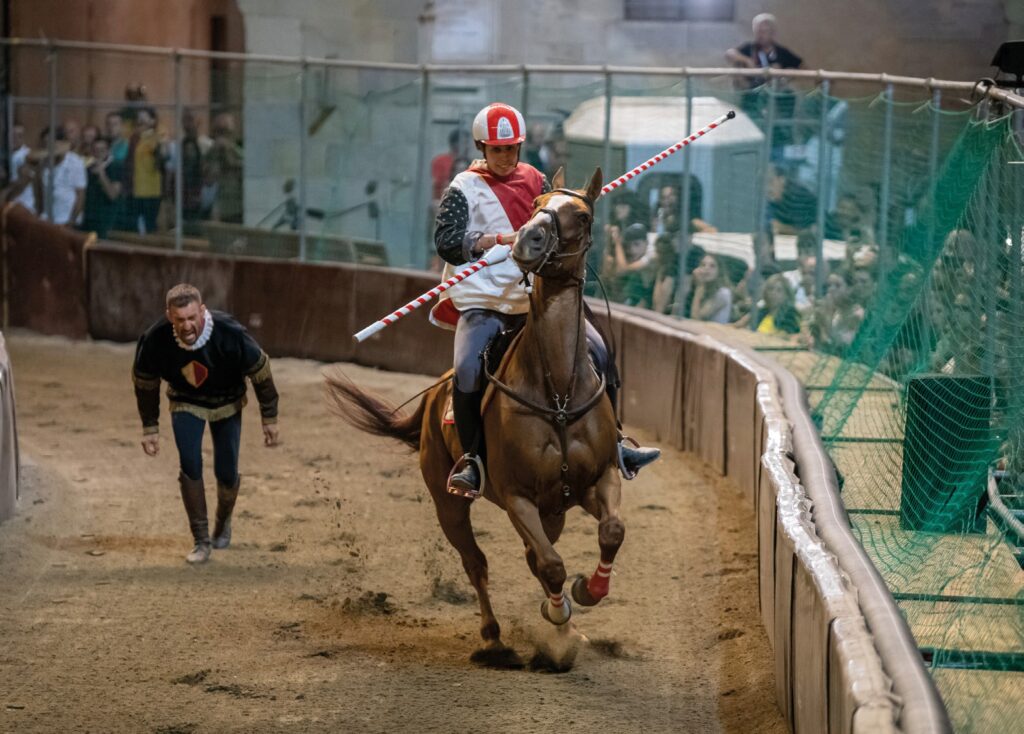
The knights challenge each other at a gallop, attempting to strike the bear-shaped target, the city’s heraldic symbol, with their lances. The district with the most points wins the joust, but a special prize, the Golden Spur, is awarded to the rider with the most brilliant performance and the highest score.
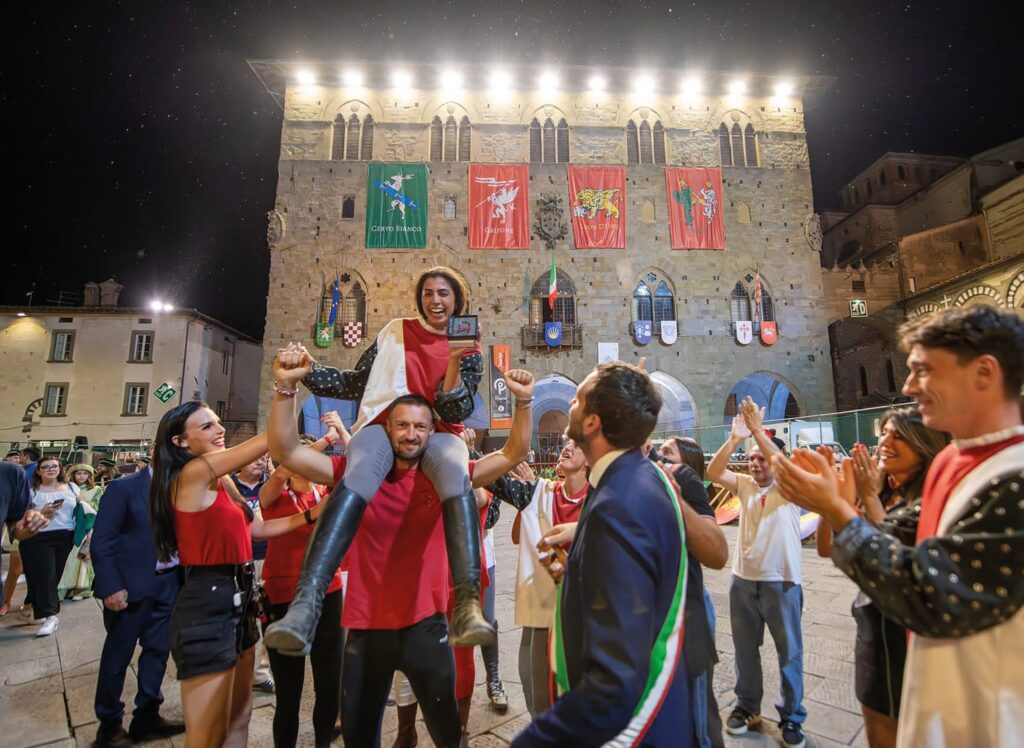
In the 2025 edition, the prestigious award was won by a young and splendid rider: Ilaria Signorini, twenty-five years old and full of irrepressible enthusiasm. Ilaria rides for the Grifone and this was her fourth joust, but she has been riding since she was a child. It was her father David who passed on this passion to her.
“My first horse was a black pony named Mina,” says Ilaria. I was three years old. In Piteccio, near my house, there was a riding stable that was about to be closed down. Only this pony remained: my dad put me on it, and I immediately fell in love with it. Then in the summer we went to Follonica on vacation: we’d leave my mom on the beach and we’d escape to the stables. Since then, I’ve never stopped riding and training. I started with the American saddle, participating in many gymkhanas, and at 15 I won the Italian championships in Verona. Over time, I started with jousting and then switched to the English saddle.
The wish to have a horse of his own was soon fulfilled.
«My first mare was called Luna and I took my first walks with her. At a certain point, however, she developed an allergy to olive trees and my father decided to sell her to move her to a healthier environment and also because he didn’t want me to see her deteriorate. That’s when I started asking for a white horse like Pippi Longstocking’s. After much research we found it almost by chance at a dealer in Cireglio: a young mare called Erbina. It was love at first sight. I kept her for thirteen years and won many gymkhanas with her. A few years later, I met a gray horse.
His owner wanted to get rid of him because he couldn’t handle him and had already decided to take him to the slaughterhouse for 600 euros. He was young and handsome, but nervous and uncontrollable: he threw himself to the ground, he wouldn’t let anyone ride him.
The thought that he might be killed made me shudder. I convinced my father to buy him for that same amount, and with a lot of patience we managed to re-tame and tame him, saving his life. His name is Gery, but I renamed him Biscotto and he is still in our stables in excellent health together with nine other horses.”
In the meantime, unfortunately, Erbina has passed away. “She began to complain: one leg wouldn’t support her anymore. We built her a sort of pulley to keep her upright, but over time she became practically incapacitated and eventually stopped responding. She was 26 years old, and watching her die was a great pain. We wanted to bury her in the garden of our house.”
Ilaria and David have had their own riding stables for many years: the Mini Ranch in Piteccio. Every day of the year, morning and evening, they go to groom the horses: they feed and clean them.
In the morning at seven-thirty, Ilaria arrives at the stables and spends about an hour grooming them; in the evening, between five and seven, it’s the same story. They are helped by a trusted veterinarian, Simone, who only deals with equines. «Simone is a special person, who makes you think about problems. Horses are like children.
When they have a problem, it’s a huge thing for me. I call him and he runs. Horses can have colic, some require a special diet, and he gives me instructions for each one: what they can do and what they should eat.
Each animal, depending on its age and needs, has its own food and supplements. Older horses, then, require special care. Gilda, my father’s historic mare, for example, has worn teeth and has been retired since she became older.
Over time, the guest list has grown: Stella has arrived, with whom I ran the Giostra dell’Orso in 2022 and 2023, and Potentilla, with whom I was able to run several quintanas thanks to the vet who resolved a serious
lactic acid buildup problem.
Then Sonora, with whom I participated in many gymkhanas, Cabana, an English thoroughbred, with whom I finished second in Monselice in 2023, and Zio Rosas, handsome, big, and muscular, with whom I won the Speron d’Oro. Fata è invece una cavalla che ho preso da poco, una nuova promessa. Three foals were also born at the riding school: Gastone, Erbina Seconda and Alice.”
The training sessions are long and tiring: from March to November, three or four hours a day. The Pistoia joust isn’t the only one Ilaria competes in, in a context where knights increasingly outnumber female amazons.
She won the Challenge of the Eagle and the Lion of San Secondo Parmense, participated, placing very well, in the Giostra della Rocca di Monselice and the Giostra dei Bastoni of San Gimignano, then won the title of “Best Amazon in Italy” for five consecutive times, awarded each year in one of the cities where historical jousts are held.
The score depends on the history of the event: the older the joust, the more points are earned.
A great rider, Gino, taught me a fundamental lesson: when you’re on a horse, you have to disconnect from everything and think only of yourself and the horse. Make your own judgment, stick to your guns, and go straight. Another key figure in my development is Giacomo, the trainer and head of the Rione del Grifone horses. We met at the Giostra del Giglio, which until a few years ago was held in Florence’s Piazza Santa Croce. I was competing: he saw me and was blown away. He wanted me on his team, deeply understood my character, and found the right key to get me to where I am today.
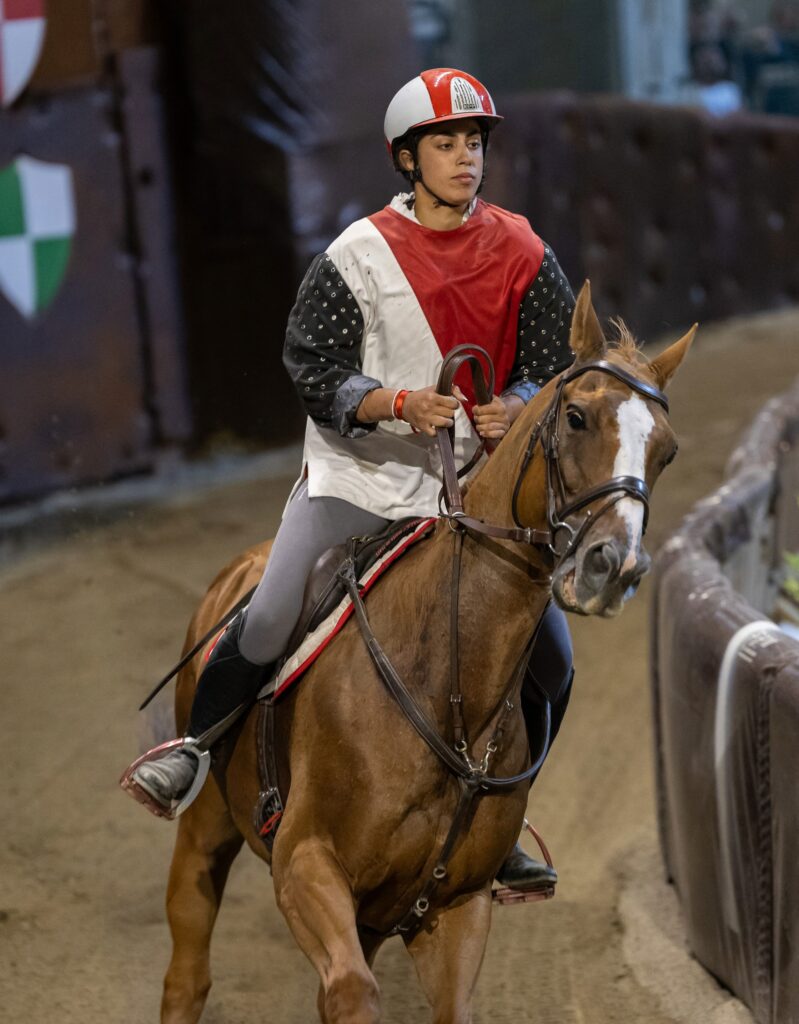
This year’s Giostra dell’Orso found her particularly motivated.
I gave it my all. I got to the last lap trying to give it my all. ‘Come on, Ilaria,’ I said to myself, ‘it’s the last one, then it’s over. Take two bears and go home.’ Another rider and I were tied, but I was faster and got an extra point. My teammates were signaling me to raise my lance: at first I didn’t understand, but I did. Only after a few seconds did I realize I had won the Golden Spur.
Ilaria’s future dreams of turning this passion into a profession. The qualifications and exams to teach horse riding are already in the drawer. But even more important than the titles is the journey so far: years of training, horses cared for every day, falls, patience and dedication.
It was from there, long before the victory in Piazza del Duomo, that his journey truly began.
Text by Chiara Caselli
Photos by Giorgio Lapini and Signorini family archive